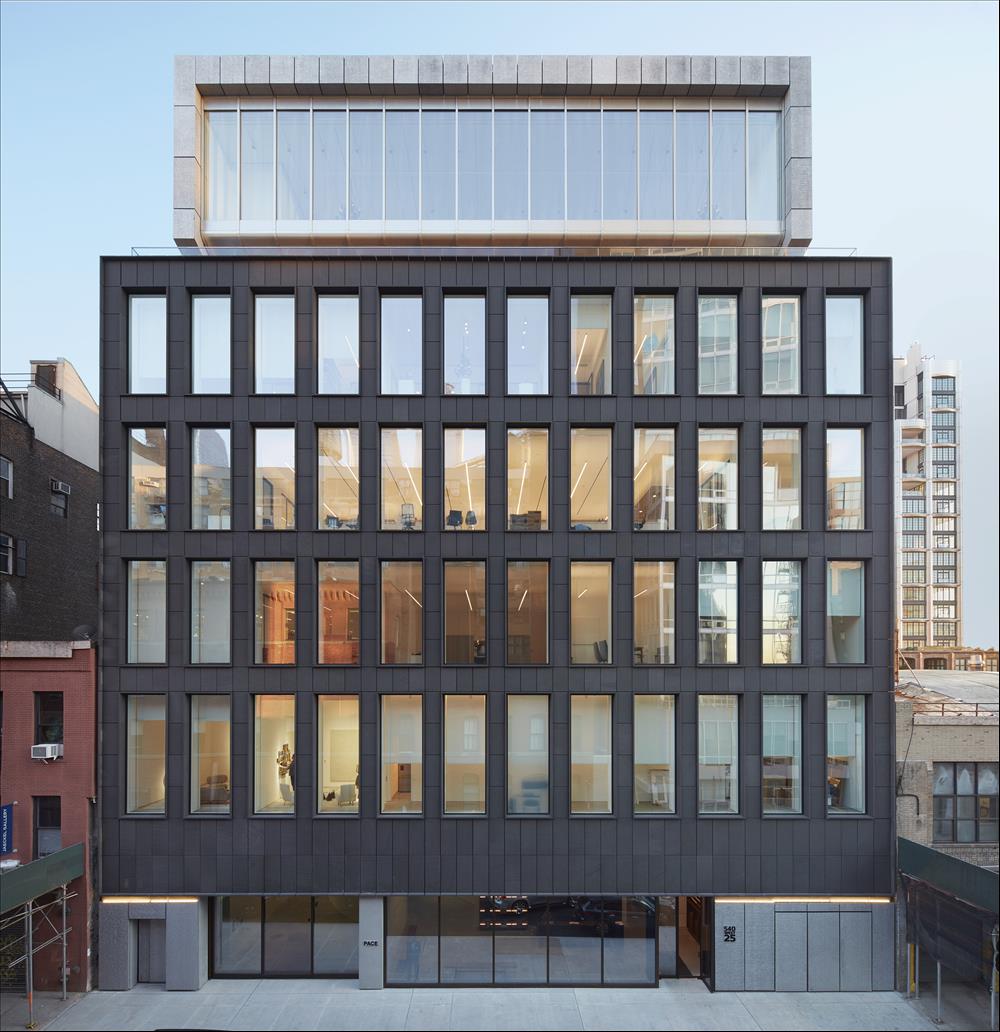
The headlines have been hard to miss.
Pace Gallery, one of the most powerful commercial galleries in the world, recently announced significant staff reductions and a dramatic pruning of its artist roster. The decision was framed not as a response to crisis but as a deliberate structural correction, an acknowledgment that the model the gallery helped build over the last decade had become unsustainable.
It is a significant moment. Not because one gallery is restructuring, but because of what it reveals about the era that is ending and the one that is beginning.
Why the Art Market’s Expansion Era Is Over
For more than a decade, the art world operated under the assumption that scale was a measure of health. Galleries opened locations across multiple cities and continents. Artist rosters expanded beyond what any institution could meaningfully advocate for. Art fairs multiplied. Infrastructure grew complex and expensive. And prices rose, not always because of artistic significance or genuine collector conviction, but because the cost of maintaining the machine kept increasing.
Speculation became embedded in the primary market. Artists were championed at prices that outpaced what real demand could absorb. Markets were built quickly around work whose visibility was manufactured rather than earned. For a period, it worked. Then it didn’t.
The correction was inevitable. What matters now is understanding what it actually signals.
Is the Art Market Collapsing? What the Data Actually Shows
It is not a collapse. Global art sales grew 4% in 2025, the first annual increase since 2022. U.S. auction sales at the major houses rose 23% year on year. Capital has not disappeared. Collectors have not retreated.
What has changed is how collecting is happening. Buyers are more deliberate. Acquisitions are driven by quality, provenance, and genuine art-historical significance rather than market momentum. The speculative layer that distorted the market for years is thinning. What remains beneath it is something more considered and more interesting.
What the Art Market Correction Really Signals
It is a return to what the art world has always worked best as. A space driven by curatorial conviction. Deep relationships between galleries, artists, and collectors. Scholarship and genuine expertise over visibility and volume.
Pace’s decision to reduce its roster is, read carefully, an argument for depth over breadth. Fewer artists represented with greater conviction. Less noise. More meaning. The galleries that are thriving in this environment are the ones that have always operated this way, focused, selective, deeply committed to the artists they work with and the collectors they serve.
The Venice Biennale this year is titled In Minor Keys. The theme the unheroic, the subtle, the sensory is not incidental. It reflects a broader cultural shift away from spectacle and toward something quieter and more lasting. The market is moving in the same direction.
What the Art Market Correction Means for New Collectors in 2026
This is where the macro story becomes personal.
The collectors who struggled most during the expansion era were the ones who entered the market when noise was loudest and prices were most distorted. They bought what was visible rather than what was significant. They acquired without a point of view. The correction exposed that immediately.
The collectors entering the market now are doing so at a moment when the noise has quieted considerably. When galleries are more focused and more honest about what they represent. When artists whose work has genuine depth are more accessible than they were when speculation was driving everything upward. When the conversation about what to collect has shifted from what is performing well to what is worth living with.
This is an extraordinary moment to begin.
Not because prices are low — though in certain segments of the market they have corrected meaningfully. But because the conditions that make for good collecting — discernment, relationship, time taken with work before acquiring it — are the conditions the market is now rewarding rather than penalising.
The collectors entering the market now are doing so at a moment when the noise has quieted considerably. When galleries are more focused and more honest about what they represent.
Why Private Art Advisory Matters More in a Correcting Market
When the market rewards scale and visibility, almost anyone can participate. When it rewards discernment and conviction, the question of who is on your side matters enormously.
A private art advisor brings no commercial interest to an acquisition. No gallery relationship to protect. No incentive to recommend one work over another beyond the long-term coherence and significance of the collection being built. In a market that is reorganising around expertise and relationship rather than volume and spectacle, that independence is not a luxury. It is the foundation of good collecting.
The era of expansion rewarded noise. The era beginning now rewards knowledge.
For collectors who want to build something that lasts — a collection with a point of view, a curatorial thread, a body of work that accumulates meaning over time — this correction is not a warning. It is an invitation.
Start a conversation with us, to explore how our advisory approach can support the thoughtful development of your collection.
Advisory — ongoing counsel around art, culture, and the art market as your collection develops over time.
Collection Development — the long-term shaping of collections, whether newly forming or well established, with attention to curatorial coherence and point of view.
Placement — how art is encountered within specific architectural environments, from private residences to offices and hospitality properties.
Curated Engagements — focused moments of exchange with artists, ideas, and cultural practice beyond the private sphere.
Advisory engagements are structured on a retainer, commission, or hybrid basis depending on the scope and nature of the relationship.
Sampadian Art Advisory works with private collectors, corporate clients, and select hospitality properties across the United States and Europe.